
Scissor skills activities for preschoolers, one easy step at a time
Cutting with scissors is one of the first things preschool teachers expect, and one of the hardest for small hands. It needs the hand to open and close, the other hand to hold and turn the paper, and the eyes to guide both at once.
The good news: it is learned in a clear order. Kids who practice in that order, a few minutes at a time, get there quickly and enjoy it.
How to teach a child to cut, in the right order
Start with snips
Short single snips across narrow strips of paper. One snip, one piece. It feels like success from day one.
Then straight lines
Wider strips with a thick line to follow. Teach "thumb on top" and the helper hand holding the paper.
Then curves and turns
Gentle curves first, then zigzags. Now the helper hand learns to turn the paper.
Then shapes and real crafts
Circles, squares and simple pictures, and finally crafts they can use or play with.
Scissor skills & early learning from LYDOS Creative
Snip Snip Hooray!
Snip Snip Hooray! follows that exact order in 5 levels, with a blank back on every page so cutting one activity never ruins the next.
- 52 cutting activities in 5 levels, from straight snips to curves and shapes
- Snippy the Crab, a friendly cutting coach, on every page
- A blank back on every activity, so cutting never ruins the next page
- Progress stars and a Super Snipper award at the end
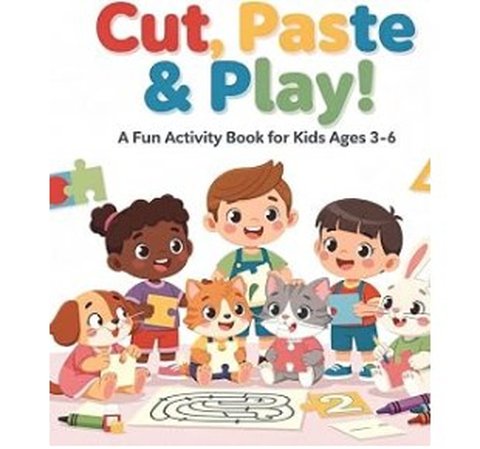
Paperbacks sold on Amazon.
Questions and answers
When should a child start using scissors?
Many children can start snipping with child-safe scissors around age 2 to 3, with an adult right next to them. Most can cut along a straight line around 4, and cut out simple shapes between 4 and 6. Every child moves at their own pace.
How do I teach my child to cut with scissors?
Show "thumb on top", let them snip narrow paper strips first, and move to lines, curves and shapes only when the step before feels easy. Short daily practice beats long sessions.
What are good fine motor activities for 3 year olds?
Snipping paper, playdough, tearing paper for collages, picking up small objects, lacing and peeling stickers all build the same hand muscles scissors need.
Are cutting practice workbooks worth it?
A good one saves you the planning: the lines get harder in the right order and kids can see their progress. Look for thick lines, a blank back on each page and activities that end in something to play with.